
Commercial Snow Removal Checklist for Property Managers
Managing a commercial property during winter takes more than arranging for snow to be plowed after a storm. Property managers need a clear plan for parking lots, sidewalks, entrances, loading areas, ice-prone surfaces, and emergency access.
A commercial snow removal checklist can help you identify your property’s priorities, determine which winter services you need, and establish expectations with your snow removal provider before winter weather arrives.
1. Identify the Areas That Need Service
Every commercial property has different access requirements, so start by creating a property-specific priority map. Identify the areas that need to be cleared first and the areas that can be addressed later.
Consider the following:
- Main entrances: Keep entrances and access points clear to ensure employees, customers, and visitors can enter the building safely.
- Accessible parking spaces and routes: Accessible parking spaces, access aisles, curb ramps, and routes to building entrances should be treated as high-priority areas.
- Employee and visitor parking: Determine which parking areas need to be cleared before your property opens or employees arrive.
- Sidewalks and pedestrian paths: Identify the sidewalks and walkways with the highest foot traffic.
- Loading docks: Keep loading and unloading areas accessible for deliveries and other essential operations.
- Service and delivery areas: Note areas that need to remain accessible to vendors, contractors, and service vehicles.
- Fire lanes and emergency access: Identify emergency access routes that must remain clear.
- Dumpster and utility access: Ensure snow does not block access to dumpsters, utility areas, or other essential service locations.
Rather than simply listing every area on the property, establish a priority order. This gives your snow removal provider a clear plan to follow during and after a storm.
2. Determine Which Snow Services You Need
Commercial properties may require several different snow and ice management services. Understanding the purpose of each service can help you build a winter plan that fits your property.
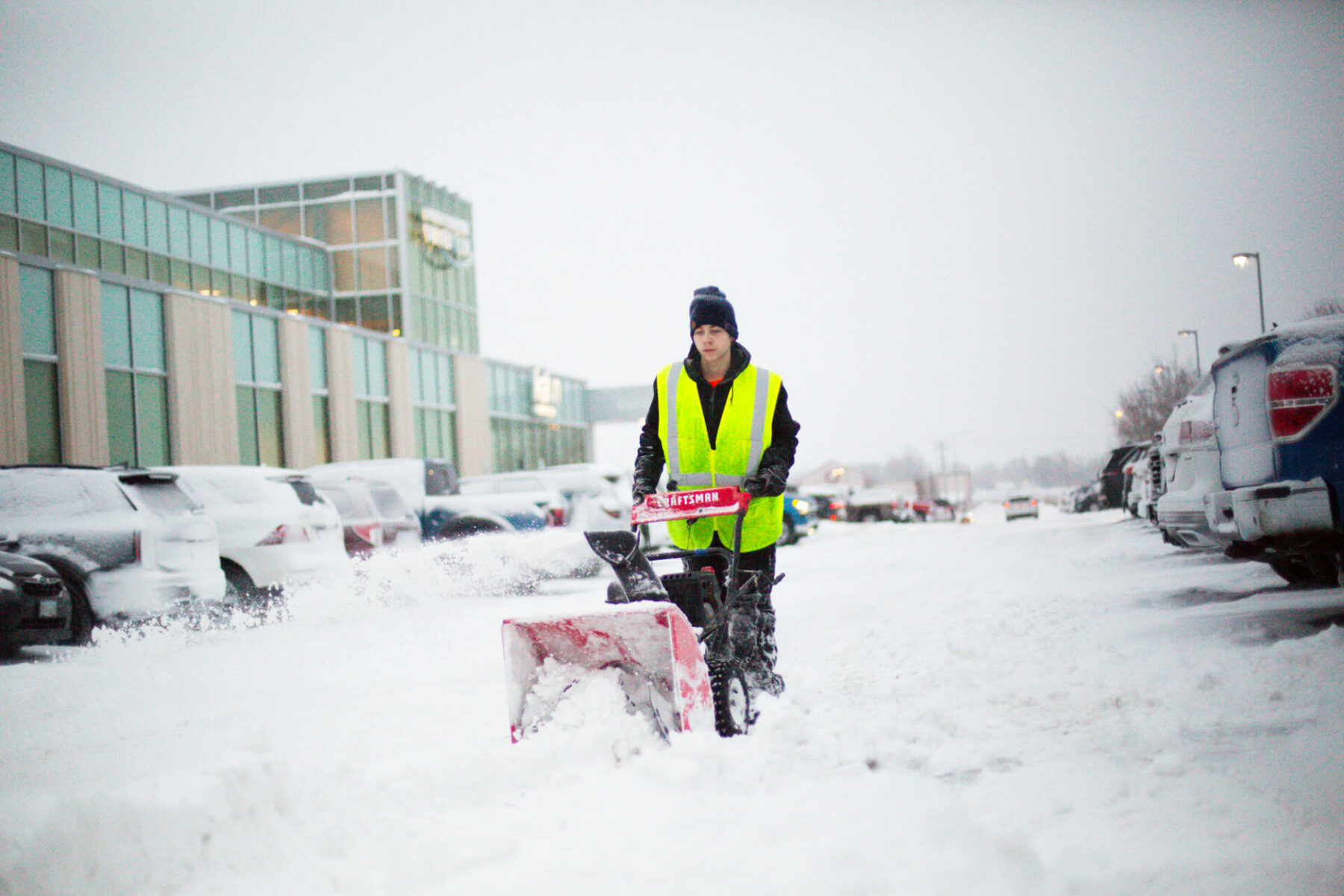
Snow plowing clears snow from parking lots, driveways, access roads, and other areas used by vehicles. Your property layout and expected snowfall can help determine where plowing should be prioritized.
Sidewalk clearing focuses on pedestrian routes, building entrances, walkways, and other areas where employees, customers, and visitors travel on foot.
De-icing helps address slippery conditions on paved surfaces. This can be particularly important around entrances, sidewalks, parking areas, and other high-traffic locations where melting snow can refreeze.
Snow hauling involves removing accumulated snow from the property when existing snow piles begin to take up valuable space or create access, visibility, or drainage concerns.
Depending on your property’s size, layout, and operating schedule, you may need a combination of these services rather than just snow plowing.
3. Establish Service Priorities Before Winter
Your snow removal plan should answer important questions before the first storm arrives. Waiting until a storm is underway to decide what needs to happen first can create confusion and delays.
Determine:
- Which areas need to be cleared first?
- When does the property need to be accessible?
- What are the property’s normal operating hours?
- When do employees typically arrive and leave?
- Where can snow safely be piled?
- Which areas should never be used for snow storage?
- Are there special events, deliveries, or shift changes that affect access?
- Who has authority to approve additional services during a storm?
For example, a retail property may need parking and entrances accessible before customers arrive, while an industrial facility may prioritize loading docks, employee parking, and truck access.
Document these priorities in advance and provide them to your snow removal provider so everyone is working from the same plan.
4. Plan for Ice, Not Just Snow
Snow is only one part of winter property management. Changing temperatures, melting snow, and refreezing conditions can create slippery surfaces even after a property has been cleared.
Pay particular attention to areas that are more likely to develop ice, including:
- Building entrances
- Shaded sidewalks and walkways
- Sloped surfaces
- High-traffic pedestrian areas
- Parking lot entrances and exits
- Areas where melting snow drains across paved surfaces
- Locations where snow repeatedly melts and refreezes
Consider how your property typically responds to changing temperatures after a snow event. A parking lot or sidewalk may be clear of snow but still require de-icing when temperatures drop and moisture freezes.
Including ice management in your winter plan helps address conditions that can develop between snow events, not just immediately after snowfall.

5. Decide How Communication Will Work
Clear communication is an important part of commercial snow management. Property conditions can change throughout a winter storm, and your team should know who to contact when additional work is needed.
Before winter begins, establish:
- The primary property contact
- The primary snow-service contact
- How service updates will be communicated
- Who should be contacted if property conditions change
- Who can request or approve additional services
- How additional work will be documented
A clear communication process can help prevent confusion when weather conditions change or when your property needs services beyond the original plan.
It can also be helpful to establish expectations for communication before, during, and after significant snow events. Your property team should know what to expect from the snow removal provider and who is responsible for making decisions when conditions require a change in plan.
6. Review Snow Storage and Hauling Needs
Snow does not disappear after it is plowed. As snow accumulates throughout the winter, piles can begin to interfere with the property’s normal operations.
Consider where snow can be stored without creating additional problems. Poorly placed snow piles can affect:
- Parking capacity: Large piles can occupy spaces needed by employees or customers.
- Visibility: Snow piles near intersections, entrances, and drive lanes can obstruct sight lines.
- Pedestrian routes: Piles can force pedestrians into parking lots or drive lanes.
- Drainage: Melting snow can create standing water or refreeze in areas with limited drainage.
- Loading areas: Snow storage can reduce the space available for deliveries and other operations.
- Utilities and dumpsters: Snow piles can make essential service areas difficult or impossible to access.
If available snow-storage areas become limited, snow hauling may be necessary. Planning for this possibility in advance can help you avoid last-minute decisions when your property no longer has adequate space for additional snow.
7. Know What to Ask a Snow Removal Provider
Before selecting or renewing a commercial snow removal agreement, ask questions that help you understand exactly how your property will be serviced.
Consider asking:
- Which snow and ice management services are included in the agreement?
- How are priority areas documented?
- What equipment will be used on the property?
- How are ice events handled?
- When is snow hauling recommended?
- Who will be my main point of contact?
- How will service updates be communicated?
- Are services available throughout the entire winter season?
- How are additional services approved and billed?
You should also make sure the provider understands your property’s operating schedule, access requirements, snow-storage limitations, and areas that require special attention.
The goal is to have a clear plan before winter weather arrives, rather than figuring out responsibilities and priorities during a storm.

8. Final Prewinter Checklist
Before winter begins, use this checklist to make sure your commercial property’s snow and ice plan is ready:
- Finalize the winter service plan before the first major snow event
- Identify priority areas for snow removal.
- Confirm operating hours and access requirements.
- Identify accessible parking spaces, routes, and entrances.
- Identify emergency access routes and fire lanes.
- Designate approved snow-storage locations.
- Note areas where snow should not be piled.
- Identify areas that regularly develop ice.
- Determine whether de-icing services are needed.
- Determine whether snow hauling may be necessary.
- Confirm property and snow-provider contacts.
- Establish how service updates will be communicated.
- Review the scope of service.
- Establish the process for approving additional services.
Prepare Your Commercial Property for Winter
A commercial snow plan should be in place before the first storm. Establishing service priorities, snow-storage areas, ice management needs, and communication expectations in advance gives your property team and snow provider a clear plan to follow.
Weller Brothers provides commercial snow removal and winter services in Sioux Falls, Rochester, and Des Moines.
Connect with your local Weller Brothers team to develop a winter service plan based on your property’s layout, operating schedule, and access needs.